The Three Kinds of Movement That Keep People Living at Home
Most people who exercise pick one thing and stay with it. The research points somewhere less convenient: it is the combination that protects independence, and the type most often skipped is the one that prevents falls.
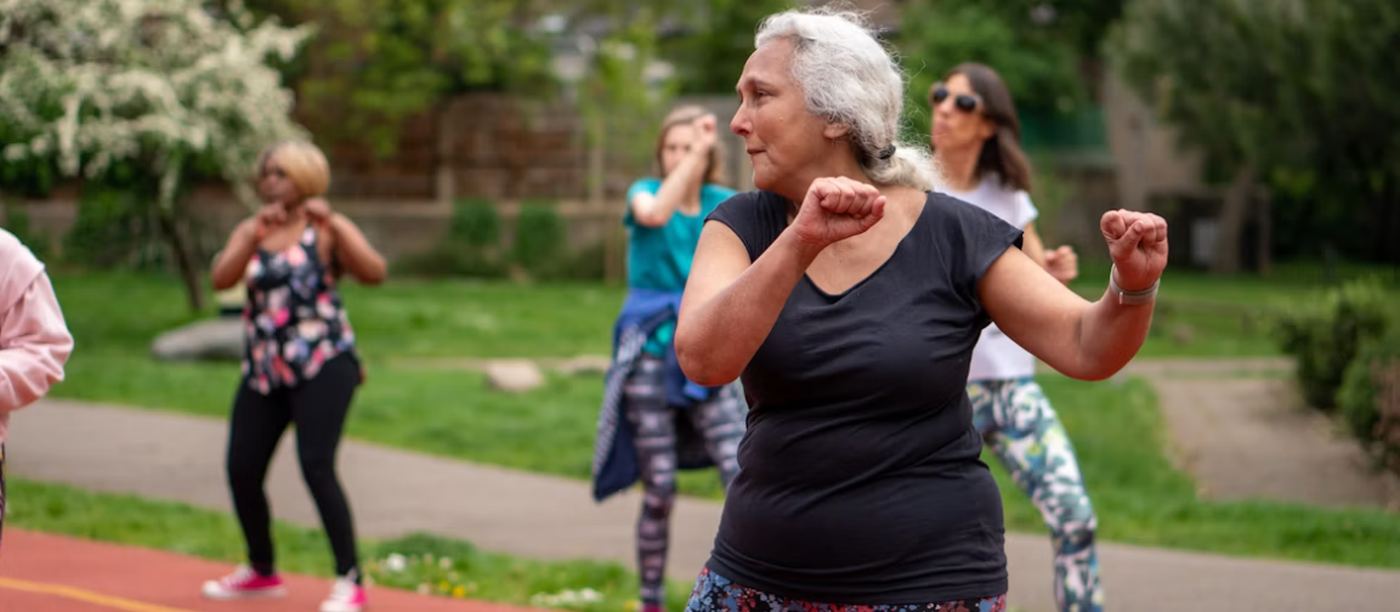
Ask most people what exercise they do and you get one answer. Walking, usually. Sometimes swimming, sometimes a class.
One answer is better than none, and it is also the most common way to leave the largest benefit on the table.
Research points to three types, not one
The National Institute on Aging is unusually blunt on this point: most people focus on one type of exercise and think they are doing enough, when research has shown it is important to get all three — aerobic, muscle-strengthening and balance. Doing one type can improve the ability to do the others, and variety reduces both boredom and injury risk [1].
The three are not interchangeable, because they protect different things.
Aerobic activity protects the system
Moving large muscles for extended periods makes the lungs move more air and the heart pump more blood. This is the type most people already do [1].
Muscle-strengthening protects function
Strength work improves physical function and helps with getting up from a chair, climbing stairs and carrying groceries. It also slows the loss of muscle mass and helps prevent falls and fall-related injuries [1].
Balance protects independence
Balance work is the type most often skipped and the one most directly tied to staying on your feet.
How much, in practice
The headline numbers are 150 minutes of moderate-intensity aerobic activity a week and muscle-strengthening on two days [2]. Both are more achievable than they sound once you stop picturing a gym.
A hundred and fifty minutes is a little over twenty minutes a day. It does not have to be continuous, and many ordinary activities count towards it — the NIA explicitly includes household tasks alongside exercise programmes [2].
For strength work, the guidance is to cover the major muscle groups — legs, hips, chest, back, abdomen, shoulders and arms — while avoiding the same muscle group on two consecutive days, so the muscle has time to recover [1].
Balance is trained in the gaps
Balance is the type least likely to have a slot in the week, and the easiest to fold into one. It does not require a class or equipment. It requires standing on one foot while the kettle boils, walking heel to toe along a hallway, standing up from a chair without using the arms.
Some activities cover several types at once. Yoga, dancing and water aerobics each combine elements of all three [1], which is a reasonable argument for choosing one of them over a treadmill if the choice is open.
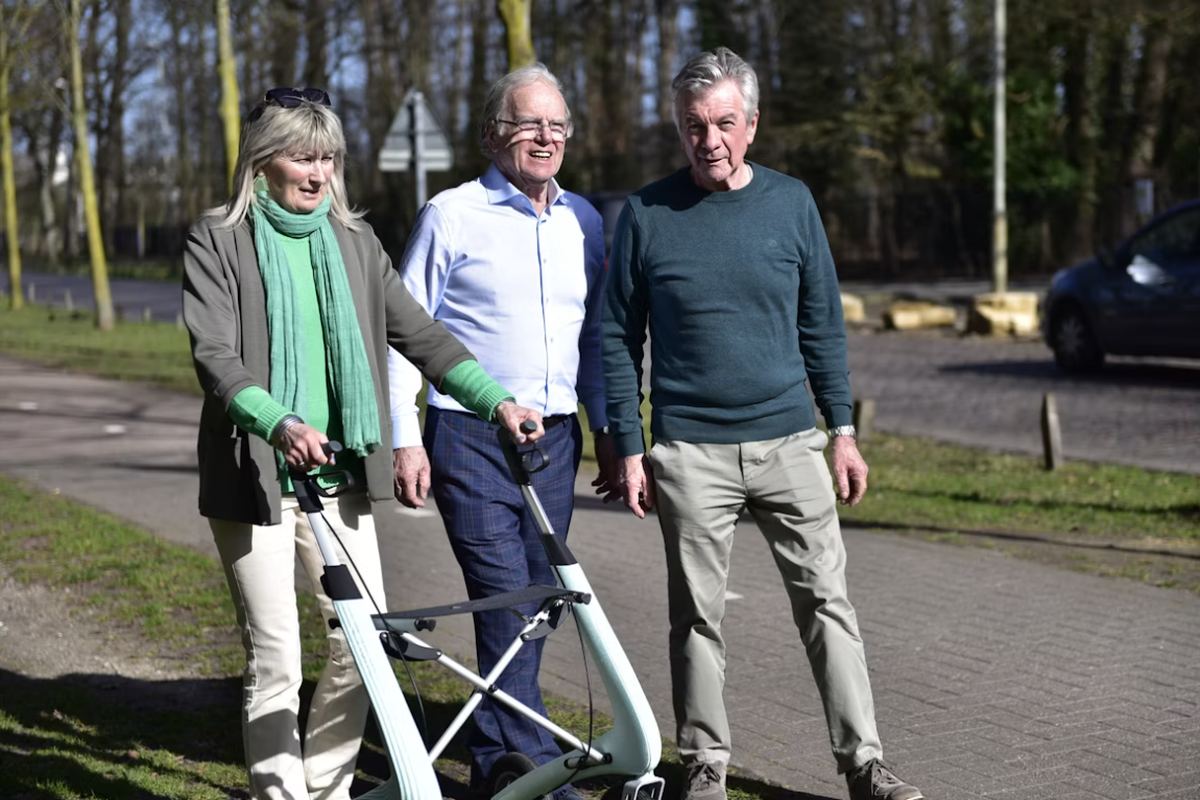
Starting from nothing
Start below what feels ambitious
The plan that survives February is the one that felt too easy in January.
Anchor it to something fixed
After breakfast, before the news, on the way back from the shop. Times of day work better than intentions.
Hold something for balance work
A kitchen counter or the back of a chair makes balance training safe enough to actually do.
Check first if there is a reason to
Anyone with heart or lung conditions, joint problems, dizziness or a recent fall should speak to their doctor before starting something new.
The NIA’s summary of the benefit is measured rather than promotional: being physically active as an older adult may improve health and health-related quality of life, and active older adults tend to live longer [2].
It is a modest claim, and it is attached to the most reliable intervention in this entire subject.
Sources
- 1Three Types of Exercise Can Improve Your Health and Physical AbilityNational Institute on Aging (NIH)
- 2Health Benefits of Exercise and Physical ActivityNational Institute on Aging (NIH)
- 3Six Tips To Help Prevent FallsNational Institute on Aging (NIH)
Editorial review based on current public health and medical literature. This is not a personal recommendation from a named clinician.
Informational only. Speak to a qualified health professional about your own situation.
A short, useful letter on aging well at home
One article a fortnight on health, safety and daily living, with the sources attached. No spam, unsubscribe anytime.
An independent publication covering health, safety and daily living for older adults and the people who care for them. We do not sell products and we are not owned by anyone who does.
This content is for informational purposes only and is not intended to replace professional medical advice, diagnosis or treatment. Always speak to a qualified health professional about your own situation. If you think you are having a medical emergency, call your local emergency number.
This site is supported by display advertising. Advertisers have no involvement in what we cover or what we conclude, and no advertiser sees an article before it is published.
Editorial policy