What Families Should Know About Safety and Independence as Parents Grow Older
The conversation usually gets framed as a trade: less freedom for more safety. It rarely has to be one.

A daughter calls at six and there is no answer. She calls again at half past. By seven she is in the car, running through the list of ordinary explanations, none of which quite settle the matter.
Most of the time the phone was simply in another room. But the reflex behind that drive — the wish to know, without having to ask every day — is what these conversations are really about.
What the numbers say
Falls are the leading cause of injury among adults aged 65 and older, and more than 14 million — about one in four older adults — report falling each year, according to the CDC [1].
The CDC also notes that fewer than half of older adults who fall tell their doctor, and that falling once doubles the chances of falling again [2]. A fall that goes unmentioned is also a fall that goes unassessed.
This is why families tend to worry most about the gap between something happening and someone finding out — not about the outing itself.
What health organisations recommend
Public guidance is consistent, and none of it involves giving up the front door key.
Report falls, even minor ones
The CDC notes that most falls are never mentioned to a clinician, which means risk factors go unreviewed [2].
Review medication side effects
The NIA lists this first among its six tips to help prevent falls [3].
Keep strength and balance work in the week
Also on the NIA list, alongside regular vision and hearing checks [3].
Keep a way to call for help within reach
The NIA's room-by-room guidance includes keeping a well-charged phone near the bed [4].
Stand up slowly
Dizziness on standing is common enough that the NIA names it explicitly [3].
Small changes, meaningful difference
One practical consideration is shortening the distance between a problem and a phone call. Not supervision — reachability.
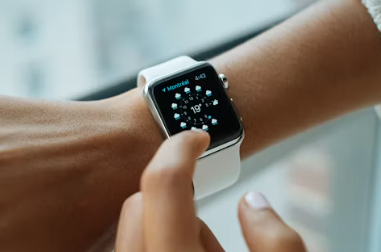
The second is making that reachability wearable. A phone left on the hall table is only useful in the hall, and the moments that matter tend to happen somewhere else.
Standalone safety watches with a call button and location sharing are one example of this approach: help and whereabouts on the wrist rather than in a pocket.
Other practical considerations
An agreed check-in rhythm
A fixed call at a fixed time removes the guesswork from silence, without anyone being tracked.
Location sharing on an existing phone
Free on most smartphones, and enough for families whose main worry is a long walk home.
A home call button
For someone who is mostly at home, a wearable button linked to a receiver covers the rooms where falls actually happen.
A monitored medical alert service
Adds a 24/7 call centre for a monthly fee — the right answer for some households, and worth pricing honestly.
Independence and safety are not opposites
Getting older does not necessarily mean giving up independence. In most families the useful question is not whether a parent should still go out alone, but how quickly help could arrive if something happened while they were out.
Answer that, and the daily phone calls can go back to being about something else.
Sources
- 1 Older Adult Falls Data CDC, National Center for Injury Prevention and Control
- 2 Facts About Falls CDC, Older Adult Fall Prevention
- 3 Six Tips To Help Prevent Falls National Institute on Aging (NIH)
- 4 Preventing Falls at Home: Room by Room National Institute on Aging (NIH)
Editorial review based on current public health and medical literature. This is not a personal recommendation from a named clinician.
Informational only. Speak to a qualified health professional about your own situation.
A short, useful letter on aging well at home
One article a fortnight on health, safety and daily living, with the sources attached. No spam, unsubscribe anytime.
An independent publication covering health, safety and daily living for older adults and the people who care for them. We do not sell products and we are not owned by anyone who does.
This content is for informational purposes only and is not intended to replace professional medical advice, diagnosis or treatment. Always speak to a qualified health professional about your own situation. If you think you are having a medical emergency, call your local emergency number.
This site is supported by display advertising. Advertisers have no involvement in what we cover or what we conclude, and no advertiser sees an article before it is published.
Editorial policy