Why Lighting Matters More Than We Think as We Get Older
The eye changes long before anyone calls it a problem. Most homes are lit for the person who moved in, not for the person living there now.
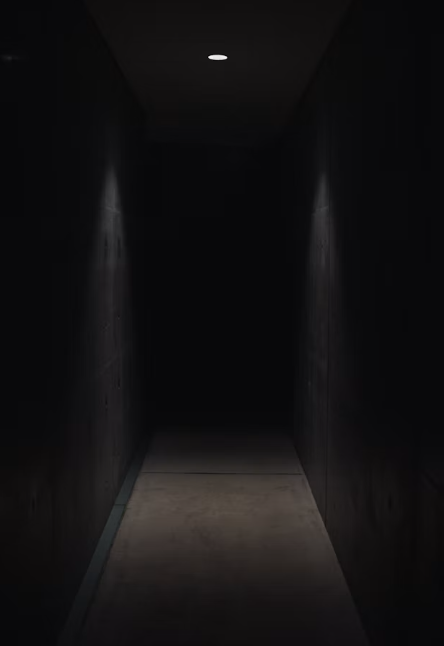
Ask someone what makes the walk to the bathroom at night difficult and they will rarely say “light”. They will say they know the house, that the switch is too bright, that they did not want to wake anyone.
The dark part of the trip is treated as a fact of the house. It is usually the most fixable thing in it.
What actually changes
With age the pupil becomes smaller and less responsive to changes in light. As NIH News in Health puts it, that is why people in their 60s need about three times more light for comfortable reading than people in their 20s, and why smaller pupils make it harder to see at night [1].
The National Institute on Aging notes that these ordinary changes are often easily accommodated, and lists improved lighting alongside glasses and contact lenses as something that can help maintain lifestyle and independence [2].
Meanwhile falls remain the leading cause of injury for adults 65 and older, with about one in four reporting a fall each year [3]. Light is not a treatment for that, but it is one of the conditions under which the rest of the house is navigated.
What health organisations recommend
Lighting appears on nearly every published home-safety checklist, usually in the first three lines.
Leave a light on at night, or use an automatic one
The NIA recommends leaving a light on in the bathroom at night, or a night light that turns on by itself in the dark [4].
Put night lights and switches close to the bed
So the first movement of the night is not a search for a wall [4].
Light both ends of stairs and long hallways
The NIA suggests switches at the top and bottom of stairs and at both ends of long corridors [5].
Keep a flashlight in reach
For power cuts, on the same list [5].
Have vision checked regularly
Both the NIA's eye guidance and its fall-prevention tips include routine eye exams [2][6].
Small changes, meaningful difference
One practical consideration is that useful night lighting is low, warm and automatic. A ceiling light solves visibility and creates glare; a small warm light at floor or hip height solves the path.
The second is that it should not depend on being switched on. The moment it needs a decision at 2 a.m., it stops being used.
Rechargeable motion-sensor lights are one example of this kind of modification — no wiring, no switch, no installation.
Other practical considerations
Brighter bulbs where tasks happen
Kitchen counters, reading chairs and the top of the stairs benefit most.
Switches at both ends
Adding a second switch to a long hallway removes the dark stretch entirely.
Reduce glare, not just darkness
Shades and matte surfaces help, since scattered light is part of the difficulty.
An eye exam
Sometimes the lighting is fine and the prescription is not.
Light is infrastructure
Vision changes gradually, and homes rarely change with it. Adding light where the house is used at night is among the least disruptive adjustments available: no builders, no conversation about capability, no loss of independence.
It is also the one most people notice within a week.
Sources
- 1 Your Aging Eyes NIH News in Health, National Institutes of Health
- 2 Aging and Your Eyes National Institute on Aging (NIH)
- 3 Older Adult Falls Data CDC, National Center for Injury Prevention and Control
- 4 Preventing Falls at Home: Room by Room National Institute on Aging (NIH)
- 5 Tips To Avoid Falls and Injuries (NIH Publication 23-AG-7180) National Institute on Aging (NIH)
- 6 Six Tips To Help Prevent Falls National Institute on Aging (NIH)
Editorial review based on current public health and medical literature. This is not a personal recommendation from a named clinician.
Informational only. Speak to a qualified health professional about your own situation.
A short, useful letter on aging well at home
One article a fortnight on health, safety and daily living, with the sources attached. No spam, unsubscribe anytime.
An independent publication covering health, safety and daily living for older adults and the people who care for them. We do not sell products and we are not owned by anyone who does.
This content is for informational purposes only and is not intended to replace professional medical advice, diagnosis or treatment. Always speak to a qualified health professional about your own situation. If you think you are having a medical emergency, call your local emergency number.
This site is supported by display advertising. Advertisers have no involvement in what we cover or what we conclude, and no advertiser sees an article before it is published.
Editorial policy